

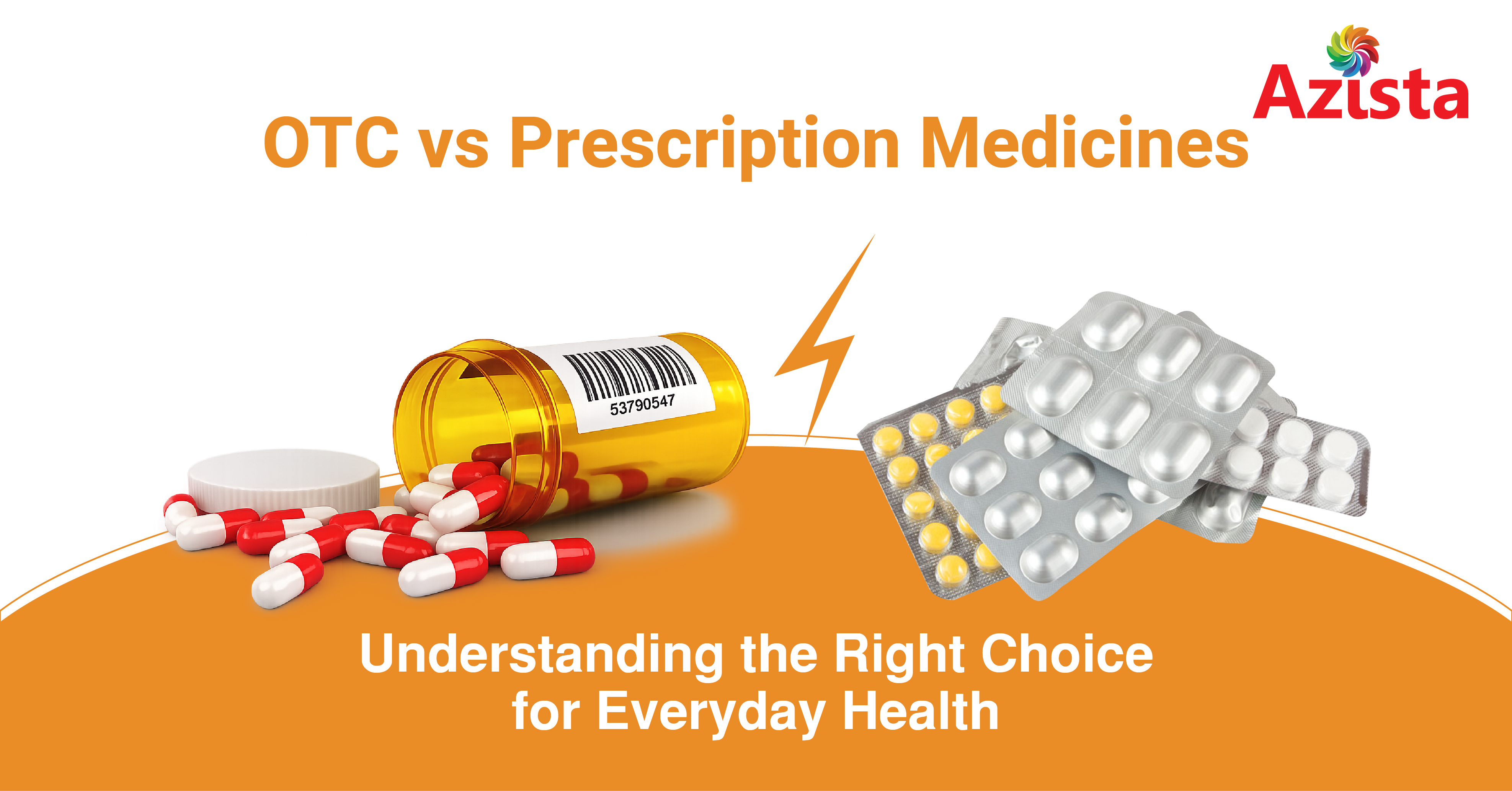
When it comes to managing everyday health concerns, choosing the right type of medication is essential. Many people often wonder about the difference between OTC and Rx drugs and when each should be used.
Understanding OTC vs prescription medicines helps individuals make informed decisions while ensuring safety, effectiveness and proper treatment. With growing awareness around preventive healthcare and self-care, knowing when to rely on over-the-counter solutions and when to consult a doctor has become increasingly important.
What are over the counter medicines? These are medications that can be purchased without a doctor.s prescription. They are typically used for common, mild health concerns and are considered safe when used as directed.
These are some examples of OTC and prescription medicines that people commonly use in their daily lives for quick and convenient relief.
Prescription medicines, also known as Rx drugs, are medications that require a doctor.s approval before use. These are typically prescribed for more serious or chronic health conditions that need medical supervision.
Knowing when to use prescription drugs ensures better treatment outcomes and reduces the risk of complications.
Understanding the difference between OTC and prescription drugs India is important for safe and effective healthcare decisions.
| OTC Medicines | Prescription Medicines |
|---|---|
| Available without prescription | Require doctor.s prescription |
| Used for mild conditions | Used for serious or chronic conditions |
| Lower risk when used correctly | Require medical supervision |
| Easily accessible | Controlled distribution |
This comparison clearly highlights the difference between OTC and Rx drugs in terms of accessibility, usage, and safety.
A common question many people ask is: are OTC medicines safe for daily use?
In general, OTC medicines are safe when:
However, overuse or incorrect usage can lead to side effects. This is why it.s important to follow instructions carefully and seek medical advice when needed.
Both OTC and prescription medicines play important roles in maintaining overall health.
Together, they create a balanced approach to healthcare-combining accessibility with clinical precision.
At Azista Industries, the focus is on developing reliable healthcare solutions that meet both everyday and clinical needs.
Azista.s OTC range is designed to support daily health and wellness, offering solutions for common concerns with a strong emphasis on safety, quality, and ease of use. These products align with the growing demand for accessible health and wellness products that support everyday wellbeing.
In the prescription segment, Azista focuses on developing scientifically backed formulations that meet regulatory standards and support healthcare professionals in delivering effective treatment outcomes.
Through its Azista Industries quality commitment, the company ensures that both OTC and Rx solutions are developed with precision, research, and compliance at every stage.
Choosing between OTC vs prescription medicines depends on the severity of the condition, duration of symptoms, and overall health status.
Understanding the difference between OTC and prescription drugs India helps individuals make safer and more effective healthcare decisions.
In today.s healthcare landscape, awareness is key. Knowing the difference between OTC and Rx drugs empowers individuals to take control of their health responsibly.
While OTC medicines offer convenience and quick relief, prescription medicines provide targeted treatment for more complex conditions. By making informed choices and prioritising safety, individuals can maintain better health outcomes in the long run.